What goes on the back cover
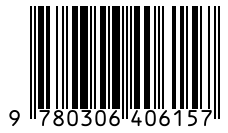
A book barcode is an EAN-13 barcode that carries the ISBN-13. The industry calls it a Bookland EAN, after the 978 prefix that was set aside for books. Bookshops, libraries and distributors all scan it the same way they scan any other product.
ISBN-10 to ISBN-13: what this tool does for you
Books published before 2007 often show only a 10-digit ISBN. Barcodes need the 13-digit form. Paste the ISBN-10 above and the conversion happens automatically:
- The old check character (the tenth, which may be an X) is dropped.
978is added to the front of the remaining nine digits.- A new check digit is calculated using the EAN method.
So 0-306-40615-2 becomes 978-0-306-40615-7. The last digit changes because the two formats use different arithmetic. ISBN-10 works modulo 11, ISBN-13 works modulo 10. You can see both calculations in the check digit calculator.
Size, position and print rules for book covers
- Size: 100% is 37.29 mm by 25.93 mm. Most cover designers use 80% to 100%. Do not go below 80%.
- Position: lower right of the back cover, at least 6 mm from the spine and the trim edges.
- Background: a plain white box behind the bars, with clear space on both sides. A barcode laid straight over cover art often fails.
- Ink: 100% black only. A barcode built from four-colour black can print with soft edges when the plates are slightly out of register.
- File type: use the SVG download and place it in your cover file as vector art. A low-resolution PNG scaled up will blur.
Do you need the 5-digit price add-on?
Some US trade books carry a second, smaller barcode to the right holding five digits. The first digit is a currency marker (5 for US dollars) and the next four are the price, so 51999 means $19.99. 90000 means no price is given.
You need it only if a bookshop chain or distributor asks for it. Print-on-demand services and online retailers work from the ISBN alone, and leaving the price off the cover means you can change it later without reprinting. This generator makes the main ISBN barcode, which is the part every channel requires.
One ISBN per format
Each edition a reader can buy is a separate product: paperback, hardback, large print and each ebook format. Each needs its own ISBN and so its own barcode. A reprint with corrected typos keeps the same ISBN. A revised edition with new content gets a new one.
If you are preparing several titles or formats at once, paste all the ISBNs into the bulk barcode generator and choose ISBN as the type. To double-check a printed proof, photograph the back cover and read it with the online barcode scanner.